
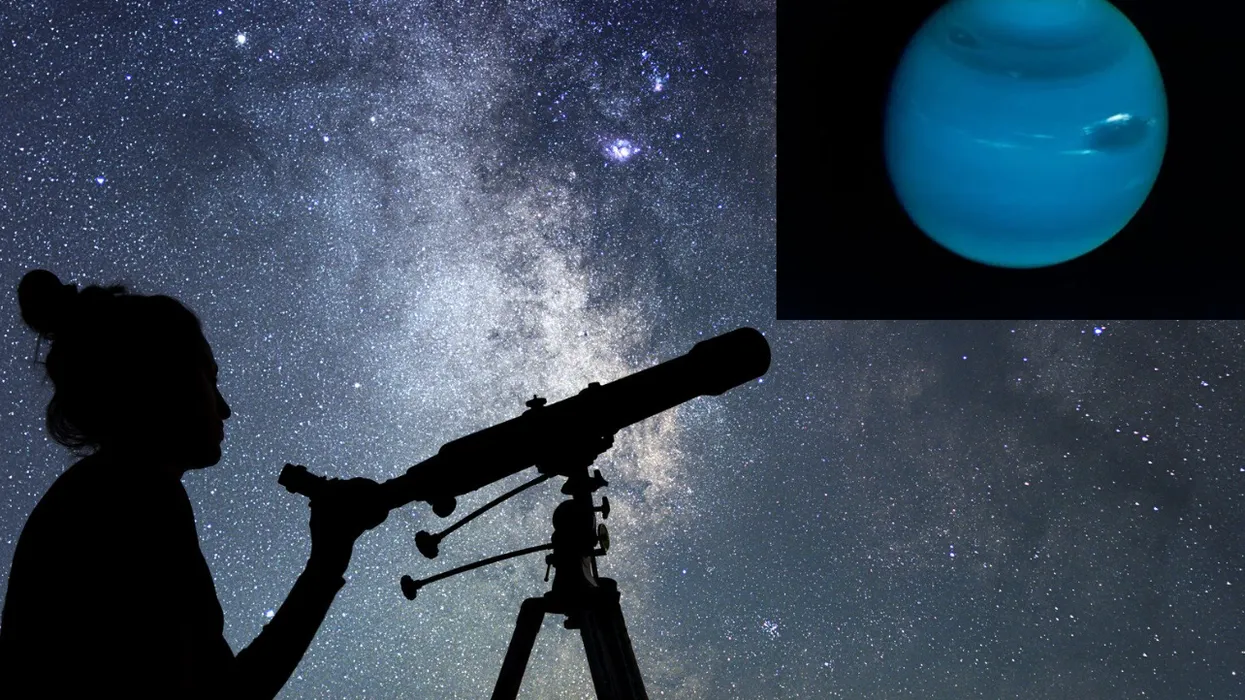
The scientific community is buzzing with excitement as astronomers increasingly point toward the potential existence of a mysterious new planet in the Solar System. Far beyond Neptune’s orbit, hidden in the cold darkness of the outer reaches, evidence suggests that a massive world may be lurking unseen, reshaping our understanding of planetary formation and the dynamics of our cosmic neighborhood. While no one has directly observed this elusive celestial body yet, the mounting indirect evidence has transformed what began as speculation into one of the most compelling mysteries in modern astronomy. This hypothetical planet, commonly referred to as Planet Nine or Planet X, could revolutionize everything we thought we knew about the architecture of our solar system and answer questions that have puzzled scientists for decades.
What makes the search for this new planet in the Solar System so fascinating is not just the potential discovery itself, but the detective work involved in piecing together clues from gravitational influences scattered across billions of miles of space. Unlike the discovery of Neptune in 1846, which was predicted through mathematical calculations of Uranus’s orbit, or the detection of thousands of exoplanets around distant stars, finding a planet in our own backyard presents unique challenges and opportunities. The journey to uncover this hidden giant combines cutting-edge technology, sophisticated computer modeling, and good old-fashioned astronomical observation, creating a narrative that captures both scientific rigor and the human spirit of exploration.
The Gravitational Breadcrumbs Leading to a New Planet in the Solar System
The story of the potential new planet in the Solar System begins with peculiar observations in the Kuiper Belt, that distant region of icy debris extending far beyond Neptune. Starting in 2014, astronomers noticed something extraordinarily unusual about certain Trans-Neptunian Objects, or TNOs for short. These frozen remnants from the solar system’s formation displayed orbital patterns that shouldn’t exist by random chance alone. Six specific Kuiper Belt Objects exhibited remarkably similar, highly elongated orbits that clustered together in a specific region of space, all tilted approximately thirty degrees from the typical planetary plane. The statistical probability of such a configuration occurring naturally was estimated at just one in fifteen thousand, an astronomically small chance that immediately raised red flags among planetary scientists.
Konstantin Batygin and Mike Brown, both astronomers at the California Institute of Technology, took these observations and ran extensive computer simulations to understand what could cause such bizarre orbital arrangements. Their groundbreaking research, published in The Astronomical Journal in 2016, proposed that a massive unseen planet was gravitationally shepherding these distant objects into their unusual paths. The researchers nicknamed their hypothetical discovery “Planet Nine,” estimating its mass at approximately five to ten times that of Earth, with an orbital distance ranging between four hundred and eight hundred astronomical units from the Sun. For perspective, Neptune orbits at about thirty astronomical units, making this potential new planet in the Solar System roughly thirteen to twenty-six times farther from our star than the outermost known planet.
What makes these gravitational breadcrumbs particularly compelling is their consistency across multiple lines of evidence. As Brown and Batygin continued their research, they identified thirteen large extreme Trans-Neptunian Objects whose orbital characteristics all pointed toward the same conclusion. These objects exhibited not just directional clustering but also showed systematic tilts averaging fifteen degrees from the ecliptic plane, the flat disk in which the planets orbit. Furthermore, the points where these objects come closest to the Sun, called perihelia, varied in predictable patterns that perfectly matched what computer models predicted a massive outer planet would produce. This wasn’t just one anomaly or a statistical fluke; it was a coherent pattern emerging from multiple independent datasets, each strengthening the case for the new planet in the Solar System.
Thermal Signatures and Infrared Detection Methods
Traditional planet hunting relies primarily on detecting reflected sunlight, but at the enormous distances where this new planet in the Solar System might exist, reflected light becomes extraordinarily faint. Here’s where physics offers an elegant solution: every object with a temperature above absolute zero emits thermal radiation, and for a cold distant planet, this heat signature could actually be easier to detect than reflected light. When you double an object’s distance from the Sun, reflected light becomes sixteen times fainter due to the inverse fourth-power relationship, but thermal radiation only becomes four times fainter. This fundamental difference has revolutionized the search methodology, shifting focus from optical telescopes to infrared space observatories specifically designed to detect heat signatures across vast cosmic distances.
Researchers led by Amos Chen from National Tsing Hua University recently took an innovative approach by analyzing data from AKARI, a Japanese space telescope that conducted the most sensitive all-sky survey in far infrared wavelengths. Unlike ground-based telescopes hampered by Earth’s warm, turbulent atmosphere, AKARI could detect the faint thermal glow that a distant ice giant should emit. The team focused their search on regions where computer simulations predicted the highest probability of finding the new planet in the Solar System, based on the orbital mechanics of known Trans-Neptunian Objects. They then implemented sophisticated filtering techniques to distinguish a slowly moving planet from the countless stars, galaxies, and cosmic debris populating these remote regions of space. The planet should appear essentially stationary over a single day but show detectable movement over months and years, a unique signature that helps separate genuine candidates from background objects.
After meticulous analysis comparing observations taken years apart, researchers identified promising candidates that emit the amount of infrared light theoretical models suggest Planet Nine should produce. One particularly intriguing object appeared in both the 1983 Infrared Astronomical Satellite data and the 2006 AKARI observations, showing the slight positional change expected from an object orbiting at approximately seven hundred astronomical units from the Sun. While this doesn’t constitute definitive proof of a new planet in the Solar System, it represents the most tangible lead yet in this cosmic detective story. Follow-up observations with more powerful telescopes like the James Webb Space Telescope could potentially confirm whether these candidates are truly moving in ways consistent with Planet Nine’s predicted orbit, or whether they’re imposters such as distant galaxies or other astronomical phenomena masquerading as a planet.
Understanding the Orbital Dynamics and Gravitational Influence
The mechanics of how this potential new planet in the Solar System influences distant objects involves intricate gravitational interactions playing out over millions of years. Planet Nine’s proposed orbit is itself highly unusual, with estimates suggesting it travels on a significantly elongated path that brings it as close as two hundred eighty astronomical units at perihelion and swings out to approximately eleven hundred twenty astronomical units at aphelion. This extreme eccentricity, combined with an orbital period estimated between ten thousand and twenty thousand Earth years, means the planet takes millennia to complete a single circuit around the Sun. During this lengthy journey, its gravitational influence systematically perturbs the orbits of smaller Trans-Neptunian Objects, gradually coaxing them into the aligned, tilted orbital configurations astronomers have observed.
Computer simulations incorporating Planet Nine’s predicted parameters have revealed additional, previously unnoticed consequences of its presence. Elizabeth Bailey, a graduate student working with Batygin, demonstrated that the planet could have tilted the entire solar system’s orbital plane by approximately six degrees relative to the Sun’s equator over the past four and a half billion years. This phenomenon, called axial precession, occurs when a massive distant object causes the whole planetary disk to wobble slowly like a spinning top on a table. This finding elegantly explains a longstanding astronomical mystery that had puzzled scientists for generations. Furthermore, simulations showed that the new planet in the Solar System should create a population of objects with retrograde orbits, traveling in the opposite direction from everything else in the solar system, and sure enough, astronomers found such objects exactly where the models predicted they should be.
Perhaps most intriguingly, recent research has extended Planet Nine’s gravitational fingerprints beyond the distant Kuiper Belt into the realm between Jupiter and Neptune. Analysis of hundreds of thousands of asteroid orbit simulations revealed that certain objects whose orbits extend beyond Neptune display population patterns that shouldn’t exist without a massive outer planet’s influence. These objects show a gradual population decline closer to the Sun, precisely matching what Planet Nine’s gravity should produce through a mechanism planetary scientists describe as “Neptune playing goalie” with the giant planets playing soccer with smaller objects. Every statistical test and simulation performed seems to generate new predictions that subsequent observations confirm, building a comprehensive, self-consistent picture of how this hidden world shapes the architecture of the outer solar system. The cumulative evidence has reached what particle physicists call “five sigma” confidence, the gold standard threshold typically required to declare a scientific discovery.
Competing Theories and Scientific Skepticism
Despite the compelling evidence supporting the new planet in the Solar System hypothesis, the scientific community maintains healthy skepticism, as good science demands. Some astronomers argue that the apparent clustering of Trans-Neptunian Object orbits might result from observational bias rather than genuine physical phenomena. Sky surveys have uneven coverage, particularly at high inclinations and in dim remote regions, making it challenging to separate real dynamical patterns from statistical noise. Telescopes naturally discover more objects in regions they observe most frequently or most deeply, potentially creating artificial clustering patterns that don’t reflect the true distribution of objects in space. The Outer Solar System Origins Survey, which discovered over eight hundred new Trans-Neptunian Objects, concluded that the evidence could be consistent with a random distribution, though crucially, their analysis couldn’t rule out Planet Nine’s existence either.
Additional challenges to the Planet Nine hypothesis have emerged from specific object discoveries that seem inconsistent with the theory’s predictions. The Trans-Neptunian Object nicknamed Ammonite displays orbital characteristics that don’t fit neatly into the gravitational influence pattern expected from Planet Nine, suggesting either the theory requires refinement or other factors are at play. Some researchers have proposed alternative explanations for the observed phenomena, including the gravitational influence of the galactic tide, the subtle pull exerted by the Milky Way galaxy itself on objects at the solar system’s extreme edges. However, detailed analyses have shown that the galactic tide alone cannot reproduce all the features observed in Trans-Neptunian Object distributions, particularly the specific clustering patterns and orbital tilts that characterize the new planet in the Solar System evidence.
An intriguing alternative hypothesis suggests that instead of a planet, a primordial black hole might lurk in the outer solar system, producing similar gravitational effects without being visible through traditional astronomical observations. Harvard astronomer Avi Loeb has even proposed innovative methods to search for such exotic objects, including looking for their gravitational lensing effects on background stars. Despite these competing theories and legitimate skepticism, the Planet Nine hypothesis remains the most parsimonious explanation that accounts for the widest range of observed phenomena with the fewest assumptions. As Konstantin Batygin noted, it’s actually harder to imagine the solar system without a Planet Nine than with one, given the accumulating evidence from multiple independent lines of investigation. The debate continues to drive productive research, with scientists on all sides working to refine models, gather better data, and ultimately resolve one of astronomy’s most captivating mysteries.
The Hunt Continues With Next-Generation Technology
Finding the new planet in the Solar System requires some of humanity’s most sophisticated observational tools and innovative search strategies. The Vera C. Rubin Observatory, perched atop Cerro Pachón mountain in northern Chile, began operations in 2025 and represents a game-changing instrument in the hunt for Planet Nine. This facility boasts the world’s largest digital camera, capable of surveying the entire visible sky every few nights, generating unprecedented amounts of data that could finally reveal the elusive planet’s position. Unlike previous surveys that covered only portions of the sky or returned to the same regions infrequently, Rubin Observatory’s comprehensive, repeated observations should detect any object moving slowly against the background of distant stars, even one as faint and distant as Planet Nine.
The James Webb Space Telescope, launched in 2021, offers complementary capabilities with its incredible sensitivity to infrared light. While JWST’s relatively narrow field of view makes it less suited for broad sky surveys, it excels at detailed follow-up observations of candidate objects identified by other telescopes. If preliminary detections from facilities like Rubin Observatory or analysis of archival infrared data produce promising leads, JWST could potentially image the planet directly, measure its size, determine its composition, and even detect any moons it might possess. Ground-based observatories like Hawaii’s Keck telescopes and Japan’s Subaru telescope continue systematic searches as well, dividing the sky into manageable sectors and methodically checking each region for objects moving at the predicted rate for a planet at Planet Nine’s estimated distance.
Citizen science projects have democratized the search for this new planet in the Solar System, enlisting thousands of volunteers worldwide to examine astronomical data. The Backyard Worlds: Planet 9 project, funded by NASA, invites members of the public to analyze images from the Wide-field Infrared Survey Explorer mission, which surveyed the entire sky in four infrared wavelength bands. Human eyes remain surprisingly effective at pattern recognition tasks that sometimes confound automated algorithms, and several significant astronomical discoveries have emerged from citizen science initiatives. Participants examine sequential images looking for objects that shift position slightly between observations, flagging promising candidates for professional astronomers to investigate further. This collaborative approach dramatically expands the search capacity beyond what professional research teams alone could accomplish, while simultaneously engaging the public in genuine scientific discovery and fostering broader understanding of astronomy.
Implications for Solar System Formation and Planetary Migration
If confirmed, the discovery of a new planet in the Solar System would fundamentally reshape our understanding of how planetary systems form and evolve. The prevailing theory suggests the early solar system began with four planetary cores that gravitationally accumulated the surrounding gas to form Jupiter, Saturn, Uranus, and Neptune. But as Mike Brown notes, there’s no fundamental reason there couldn’t have been five cores rather than four. Planet Nine could represent that fifth core, and if it wandered too close to Jupiter or Saturn during the chaotic early days of solar system formation, gravitational interactions could have flung it into its current distant, eccentric orbit. This scenario, called planetary scattering, is well-understood theoretically and has been observed in computer simulations of planetary system evolution, but finding concrete evidence in our own backyard would provide invaluable confirmation.
Alternative formation scenarios present equally fascinating possibilities. Planet Nine might have originated as a rogue planet, wandering through interstellar space after being ejected from its birth system, only to be gravitationally captured when it passed near the young Sun. Early in solar system history, the Sun likely resided in a dense stellar nursery surrounded by thousands of sibling stars, and planets could potentially transfer between systems during close stellar encounters. If Planet Nine is indeed a captured interloper, its composition might differ significantly from the native planets, potentially containing chemical signatures reflecting a different origin. Spectroscopic analysis once the planet is located could reveal these telltale differences, offering unprecedented insights into planet formation processes occurring light-years away in different stellar environments.
The existence of this new planet in the Solar System would also help explain why our planetary family appears somewhat unusual compared to systems discovered around other stars. Surveys of exoplanets have revealed that super-Earths and mini-Neptunes, planets with masses between Earth and Neptune, are extraordinarily common throughout the galaxy, yet our solar system contains no examples in the inner or middle regions. Planet Nine, with its estimated mass of five to ten Earth masses, would partially fill this gap, suggesting that super-Earths aren’t absent from our system but rather were ejected or scattered to extreme distances during formation. This finding would make our solar system seem simultaneously more normal, by including a planet type common elsewhere, and more unusual, by having that planet on such an extraordinarily distant orbit. Understanding this history would illuminate the dynamical processes that sculpt planetary systems and determine which configurations prove stable over billions of years.
What Happens Next in the Search
The quest to definitively confirm or refute the existence of the new planet in the Solar System stands at a critical juncture. With multiple promising candidates identified in infrared surveys and next-generation observatories now operational, the coming months and years could finally resolve this astronomical mystery. Researchers continue refining their search parameters, incorporating new data as it becomes available and using increasingly sophisticated computer models to predict where the planet should be at specific times. The search region, while still encompassing a substantial portion of the sky, has narrowed considerably compared to initial estimates, thanks to better understanding of the orbital constraints imposed by observed Trans-Neptunian Object dynamics. Every additional extreme Trans-Neptunian Object discovered further tightens these constraints, gradually boxing Planet Nine into an ever-smaller region of potential locations.
Professional astronomers emphasize that patience and persistence are essential virtues in this search. Planet Nine, if it exists, is extraordinarily faint, potentially fainter than magnitude twenty-five, which is about one hundred million times dimmer than the faintest stars visible to the naked eye. Detecting such an object requires accumulating light over extended exposure times and carefully comparing multiple observations to distinguish genuine planetary motion from measurement uncertainties and background noise. False alarms are inevitable in such searches; numerous candidate objects initially appear promising but ultimately prove to be distant galaxies, asteroids in the main belt, or even image artifacts. Each false alarm, while disappointing, helps refine search algorithms and teaches researchers to recognize the subtle distinguishing characteristics that separate genuine planets from imposters.
Regardless of whether Planet Nine is ultimately confirmed or the hypothesis is conclusively disproven, the search has already yielded tremendous scientific value. The investigation has motivated comprehensive surveys of the outer solar system, cataloging thousands of Trans-Neptunian Objects and dramatically improving our understanding of the Kuiper Belt’s structure and dynamics. Researchers have developed new mathematical techniques for analyzing orbital clustering, created sophisticated simulation tools for modeling planetary system evolution, and pioneered innovative methods for detecting faint, distant objects. The possibility of a new planet in the Solar System has captured public imagination, inspiring a new generation of astronomers and demonstrating that even in our well-studied cosmic neighborhood, profound mysteries and exciting discoveries still await. As technology continues advancing and observational data accumulates, the truth about Planet Nine edges ever closer to revelation, reminding us that the universe delights in keeping some secrets just a little while longer.
Frequently Asked Questions About the New Planet in the Solar System
How likely is it that the new planet in the Solar System actually exists?
While no one has directly observed Planet Nine yet, the statistical confidence supporting its existence has reached what particle physicists call “five sigma,” equivalent to about a one-in-a-million chance that the observed patterns could occur randomly. Multiple independent lines of evidence all point toward the same conclusion, though some scientists remain skeptical and alternative explanations haven’t been completely ruled out. Most astronomers familiar with the research consider the evidence compelling enough to warrant continued, intensive searching.
When will astronomers definitively find the new planet in the Solar System?
There’s no guaranteed timeline for discovery, as the planet’s exact location remains unknown and it’s extraordinarily faint. However, new facilities like the Vera Rubin Observatory, which began operations in 2025, dramatically increase the probability of detection. Researchers are cautiously optimistic that within the next few years, either the planet will be found or the available parameter space will shrink enough to seriously challenge the hypothesis. Some candidate objects already identified in infrared surveys await follow-up confirmation observations.
Could the new planet in the Solar System pose any danger to Earth?
Absolutely not. Planet Nine, if it exists, orbits at a minimum distance of approximately 280 astronomical units from the Sun, which is roughly 26 billion miles away. Earth orbits at just 1 astronomical unit. The planet’s orbit never brings it anywhere near the inner solar system, and its gravitational influence on Earth is completely negligible. There is zero chance of collision or any harmful effects on our planet. The only thing changing would be our understanding and appreciation of the solar system’s architecture.
Why wasn’t this new planet in the Solar System discovered sooner?
Distance and dimness are the primary challenges. At hundreds of astronomical units from the Sun, Planet Nine reflects incredibly little sunlight, making it far fainter than other planets in our solar system. Previous sky surveys either lacked sufficient sensitivity to detect such a faint object or didn’t cover the region where it’s predicted to be located. Additionally, the planet moves extremely slowly across the sky, requiring observations separated by months or years to detect its motion against background stars. Modern computational tools and comprehensive sky surveys have finally made detection feasible.
What would astronomers name the new planet in the Solar System if confirmed?
The discoverer traditionally receives naming rights for celestial bodies, following International Astronomical Union guidelines that specify planets should be named after figures from classical mythology, consistent with existing planetary names. “Planet Nine” is merely a placeholder designation until formal discovery and naming occurs. Given the significance of discovering a new planet in our solar system, the naming process would likely involve extensive discussion within the astronomical community to select an appropriately meaningful name that honors the discovery’s importance.
What do you think about the possibility of a new planet in the Solar System? Does the evidence convince you, or do you lean toward skepticism? Share your thoughts in the comments below, and let’s discuss what this potential discovery might mean for our understanding of planetary formation and solar system dynamics!


